
Who Controls Your ISBN, Imprint and Publishing Accounts?


“You own your book” does not answer every publishing question. Before choosing a service, establish who is recorded against the ISBN, which imprint appears, who controls the publishing account and which files you receive. These are separate arrangements and should be explained separately.
This guide offers questions to ask before ordering, not an interpretation of your individual publishing contract. Its practical focus is what you can verify and document before a project begins.
Start with four separate questions
Rights: what rights are being licensed, assigned or retained under your agreement?
Identification: which ISBN is used for each edition, and which publisher or imprint is associated with it?
Accounts: who operates the platform account, receives reports and manages payments?
Files: what final and editable production files will be delivered, and under what usage terms?
A statement about one of these should not stand in for an answer about all four. For example, a print-ready PDF does not necessarily include its editable design project. An author byline does not establish who can change the retail listing.
What the ISBN choice tells you
KDP’s current ISBN guidance distinguishes its free ISBN, which is usable only with KDP and displays “Independently published,” from an author-supplied ISBN registered through the relevant agency. For your own ISBN, the information entered in KDP needs to match the registered details. Different print formats need their own identifiers; KDP ebooks do not require an ISBN.
A free KDP ISBN is an available platform option, not evidence that a book is unprofessional. The useful decision is whether its restrictions fit your edition and distribution plans. Do not assume a number supplied by a third-party package is registered to your own imprint: ask for the exact arrangement.
Before paying for an ISBN service, request the registered publisher or imprint name, the format covered, any platform restrictions and the process for correcting metadata. Keep the answer with your project records. An ISBN identifies an edition; questions about rights still need their own written answers.
Imprint and author name are different fields
The author name identifies the credited writer. The imprint is a publishing name shown in the relevant publishing records. It is possible for these names to differ without anything being wrong, but you should know what will appear before approving the setup.
Original example: an author writes under the name Maya Reed and wants a small publishing brand called Cedar Path Books. Her brief should state which name belongs in the author field and which is intended as the imprint, then verify that the ISBN registration and platform entry support that choice. This is a hypothetical example, not an existing publisher or client arrangement.
Who controls your publishing accounts?
For your publishing accounts, ask who is the account holder, which email receives notices, who can submit revisions and how royalty or sales statements will be supplied. If a provider manages distribution through its account, request a clear description of reporting, payment timing and the process for ending the arrangement.
Do not assume access will be transferred later merely because someone says you can “take over.” Platform requirements and the agreement matter. Establish the exit process before release: can listings continue, what needs to be changed and what files or metadata will you need?
Use the platform’s permitted access methods. Keep your own recovery information secure and avoid treating a password shared in an ordinary project email as a durable handoff plan.
Ask for a deliverables inventory
List the files you expect instead of asking only for “everything.” A useful inventory might include the approved manuscript, print interior PDF, cover PDF, EPUB, cover image, metadata sheet and any separately agreed editable design files.
Specify the edition and version each file belongs to. A paperback cover can depend on the printer’s template, paper and page count; another edition may require a new cover export. Also ask which fonts, stock images or other licensed assets can be reused and which require separate licensing.
The practical test is simple: if you hire a different formatter next year, what will they actually have to work with? The answer may legitimately be final PDFs rather than editable source files, but that distinction should be clear in the quote.
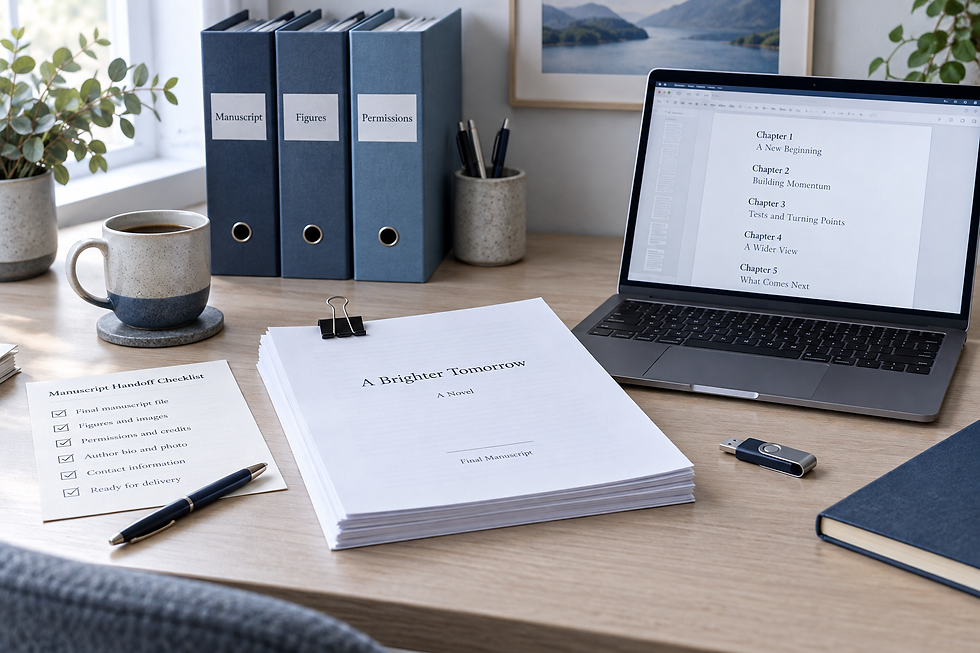
A copyable ownership and handoff checklist
What rights does the agreement grant, for which formats, territories and duration?
Who is supplying each ISBN and which publisher or imprint will be recorded?
Which platform accounts will be used and who controls them?
Who receives sales reports and payments, and how are they shared?
Which final files and editable source files are included?
What permissions or asset licences limit later reuse?
How are corrections and future editions handled?
What happens if either party ends the service?
Mark every answer Confirmed, Needs clarification or Not included. Add the document or message where the answer is recorded. Avoid leaving critical decisions as verbal assumptions.
Compare two proposals on the same basis
Suppose Proposal A includes production files but uses a provider-managed distribution arrangement. Proposal B involves author-operated accounts but excludes editable design files. Neither short description tells you which is better for your project.
Compare the missing details: your intended platforms, need for ongoing support, revision plans, reporting expectations and exit costs. A low upfront price may still be suitable if the boundaries are explicit. A larger package does not automatically mean broader control.
Before you approve your publishing setup
Review the metadata sheet beside the relevant written agreement. Confirm names, formats, files and responsibilities before submission. Where contract language is unclear or rights are material, obtain an appropriate professional review rather than relying on a general blog checklist.
Read our self-publishing package checklist for the broader buying decision. If you are considering Publishing Spot’s publishing services or its ISBN and barcode service, confirm the specific imprint, account and file-delivery arrangements before ordering. Book a consultation to discuss those questions.
Examples and comparison method are original planning aids. KDP guidance reviewed October 7, 2026; verify current requirements before submission.


Comments